
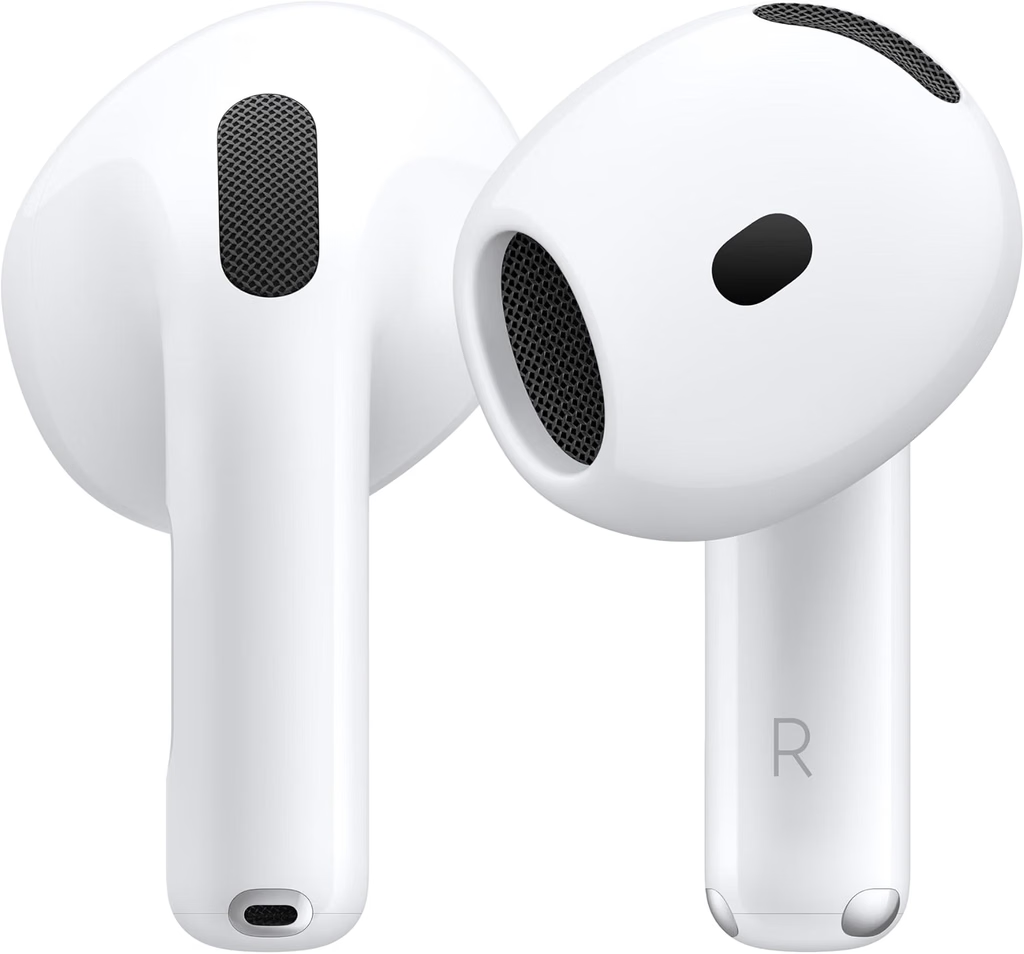
Apple offers a range of wireless earbuds designed for different listening preferences, budgets, and daily routines. From the standard open-fit models to the feature-rich AirPods Pro line and the over-ear AirPods Max, each product has its own strengths. Understanding the differences between the Apple AirPods lineup can make it easier to choose the right option for music, calls, commuting, workouts, and travel.
Apple AirPods at a Glance
The AirPods family includes several generations of standard AirPods, AirPods Pro models, and AirPods Max. Standard AirPods generally focus on simplicity and an open-fit design. AirPods Pro models add silicone ear tips, active noise cancellation, and more advanced listening features. AirPods Max provides a full-size over-ear experience for people who want a larger design and immersive sound.
Before buying, it is important to compare fit, sound controls, battery expectations, charging cases, device compatibility, and available features. Model names can look similar, but the experience can differ significantly between generations. The following guide explains the main differences across the Apple wireless earbuds range.
AirPods 1st Generation
The first-generation Apple AirPods introduced many users to Apple’s truly wireless earbud design. They used an open-fit shape without silicone ear tips and included a compact charging case. Their main appeal was convenience: simple Bluetooth pairing, automatic connection with Apple devices, and a lightweight form that was easy to carry.
Compared with newer models, the original AirPods earbuds have older processing hardware, fewer listening controls, and shorter expected battery performance. They do not offer active noise cancellation or newer immersive audio features. They can still be suitable for basic listening, but shoppers considering them should pay close attention to age, battery condition, software compatibility, and seller information.
AirPods 2nd Generation
The second-generation AirPods retained the familiar open-fit design while improving the internal chip and wireless experience. They support hands-free Siri access and can be purchased with a standard charging case or, depending on the configuration, a wireless charging case. The design remains lightweight and comfortable for people who prefer earbuds that do not seal the ear canal.
These wireless AirPods are a practical choice for calls, podcasts, music, and everyday device switching. However, they do not provide active noise cancellation, transparency mode, or silicone ear tips. Their sound isolation is therefore limited, which can be useful when staying aware of surroundings but less ideal in airplanes, busy offices, or loud public spaces.
AirPods 3rd Generation
The third-generation AirPods model introduced a redesigned shape inspired by the Pro line while keeping an open-fit approach. They include features such as spatial audio with dynamic head tracking, sweat and water resistance for suitable activities, and a force sensor for playback and call controls. The charging case is also designed to provide extended battery convenience compared with earlier standard generations.
For shoppers comparing standard AirPods, the third generation is a stronger option than the first and second generations for immersive content and modern controls. It still does not create the same seal as AirPods Pro, so it does not offer the same level of passive isolation or active noise cancellation. Fit is personal, and users should consider whether an open design stays securely in place during movement.
AirPods 4
AirPods 4 represent a newer generation of standard Apple earbuds with a refreshed design and updated features. The standard version focuses on an open fit, easy pairing, voice calls, and everyday listening. A version with active noise cancellation adds more advanced sound control while preserving the general open-fit concept.
When comparing AirPods 4 with noise cancellation to earlier standard models, the main differences include improved processing, newer controls, and the ability to reduce certain environmental sounds. Noise cancellation performance can vary because open-fit earbuds do not seal the ear in the same way as Pro models. AirPods 4 may appeal to users who want modern features but prefer the feel of traditional earbuds.
AirPods Pro 1st Generation
The first-generation AirPods Pro introduced silicone ear tips, active noise cancellation, and transparency mode to Apple’s earbud lineup. The interchangeable tips help create a more secure seal, while noise cancellation is designed to reduce surrounding sound. Transparency mode allows ambient audio to pass through, which can be useful when speaking with someone or listening near traffic.
These noise-cancelling AirPods are more feature-rich than standard generations, but they are older than current Pro models. Battery capacity and long-term condition are important considerations when buying used or refurbished units. Buyers should also check which ear tips, charging case, and accessories are included.
AirPods Pro 2nd Generation
The second-generation AirPods Pro improved on the original Pro design with a newer chip, stronger noise control, adaptive listening features, and enhanced case functionality. Depending on the specific version and software support, users may also benefit from features such as personalized spatial audio, conversation awareness, adaptive audio, and hearing-related tools.
For many shoppers, AirPods Pro 2 offers the most complete in-ear experience in the lineup. The silicone tips provide a customizable fit, while active noise cancellation suits commuting and travel. The main trade-off is that some users do not like the sealed in-ear feeling. The Pro design may also cost more than standard AirPods, especially when purchasing a newer configuration.
AirPods Max
AirPods Max are Apple’s over-ear wireless headphones. Unlike the in-ear models, they use large ear cushions that surround the ears and provide a different level of comfort, sound presentation, and passive isolation. They include active noise cancellation, transparency mode, spatial audio support, physical controls, and a premium metal-and-fabric construction.
People considering AirPods Max headphones should remember that they are larger and heavier than earbuds. They are well suited to home listening, offices, flights, and focused work, but they take up more room in a bag. Their cost is also typically higher than the in-ear range. A buyer should compare portability, comfort, battery expectations, and preferred sound style before choosing them.
Key Differences Between AirPods Models
Fit is one of the biggest differences across the AirPods models. Standard AirPods use an open-fit design, while AirPods Pro uses silicone ear tips for a closer seal. AirPods Max uses over-ear cushions. The right fit depends on comfort, stability, noise isolation, and how the earbuds feel during extended listening.
Noise control is another major distinction. Older standard Apple earbud models do not include active noise cancellation. AirPods 4 with noise cancellation, AirPods Pro, and AirPods Max offer more advanced ways to manage environmental sound. Even so, the result depends on fit, surroundings, audio content, and the exact model.
Spatial audio is available on selected newer AirPods versions, making compatible films, music, and other content feel more immersive. Newer chips also help support faster pairing, device switching, voice features, and computational audio. If these functions matter to you, verify that both the AirPods model and your Apple devices support them.
Which AirPods Should You Choose?
Choose standard AirPods for everyday listening if you want a lightweight open-fit design for calls, podcasts, and casual music. AirPods 2 may suit buyers seeking basic functionality, while AirPods 3 or AirPods 4 provide a newer design and more modern features. AirPods 4 with noise cancellation can be a middle ground for users who want extra sound control without silicone tips.
Choose AirPods Pro for travel, commuting, workouts, and noisy environments if you prefer a sealed in-ear fit and active noise cancellation. The second-generation Pro model is the more advanced choice within the Pro family, but older first-generation units may still be worth considering when their condition and price are appropriate.
Choose AirPods Max for over-ear listening if comfort, immersive sound, and strong noise control matter more than compact portability. They are a different category from Apple’s earbuds and may appeal to listeners who prefer full-size headphones.
Final Buying Advice
The best AirPods to buy depend on your preferred fit, budget, listening environment, and device ecosystem. Compare the generation, charging case, battery condition, included accessories, warranty, and compatibility before ordering. Apple may also change available configurations over time, so check the exact product description rather than relying only on the model name.
Overall, the Apple AirPods lineup offers a clear progression: standard models prioritize simplicity, AirPods Pro adds a sealed fit and advanced noise control, and AirPods Max delivers a premium over-ear experience. By matching the model’s strengths to your routine, you can choose wireless audio that is comfortable, convenient, and appropriate for the way you listen.